Safety procedures fail not because of bad intent—but because of bad documentation. Nowhere is this more dangerous than in lockout tagout (LOTO) programs. Workers assume machinery is de-energized. Supervisors believe procedures are followed. Yet, when an injury occurs, investigators often trace the root cause back to missing, incomplete, or incorrect LOTO paperwork.
OSHA’s standard 29 CFR 1910.147 doesn’t just require energy control procedures—it mandates documented proof. That’s where most companies stumble. They treat lockout tagout paperwork as a checkbox exercise, not a critical layer of protection. The result? Increased liability, avoidable downtime, and, worst of all, preventable harm.
This is not about compliance theater. It’s about creating documentation that workers can use, auditors can trust, and safety managers can rely on when lives are on the line.
Why Lockout Tagout Paperwork Is Non-Negotiable
Lockout tagout is more than locks and tags. It’s a system. And every system needs operating instructions. That’s what LOTO paperwork provides.
Without documented procedures, you’re relying on memory, assumption, or verbal handoffs—none of which hold up under pressure. Consider this real-world case: a maintenance technician at a Midwest manufacturing plant was clearing a jam in a conveyor. He assumed the line was locked out because he saw a tag. But the LOTO form wasn’t filled out, the energy sources weren’t verified, and someone upstream reset a breaker. The machine cycled. The technician lost two fingers.
An investigation revealed no written procedure existed for that specific equipment. OSHA fined the company $180,000.
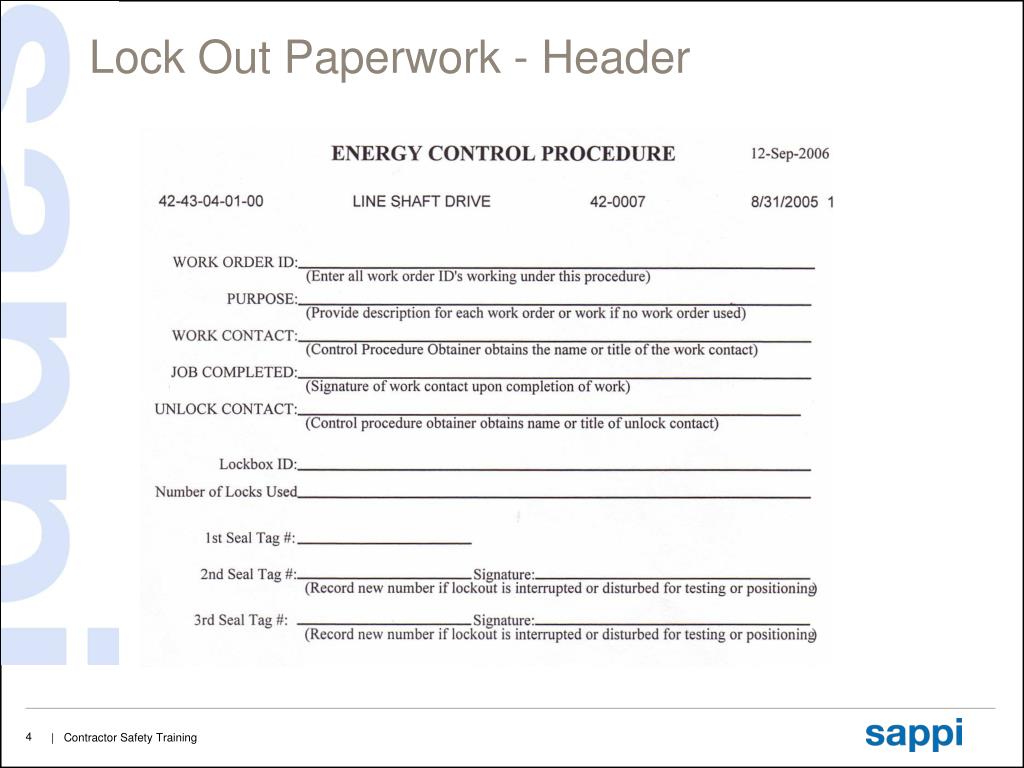
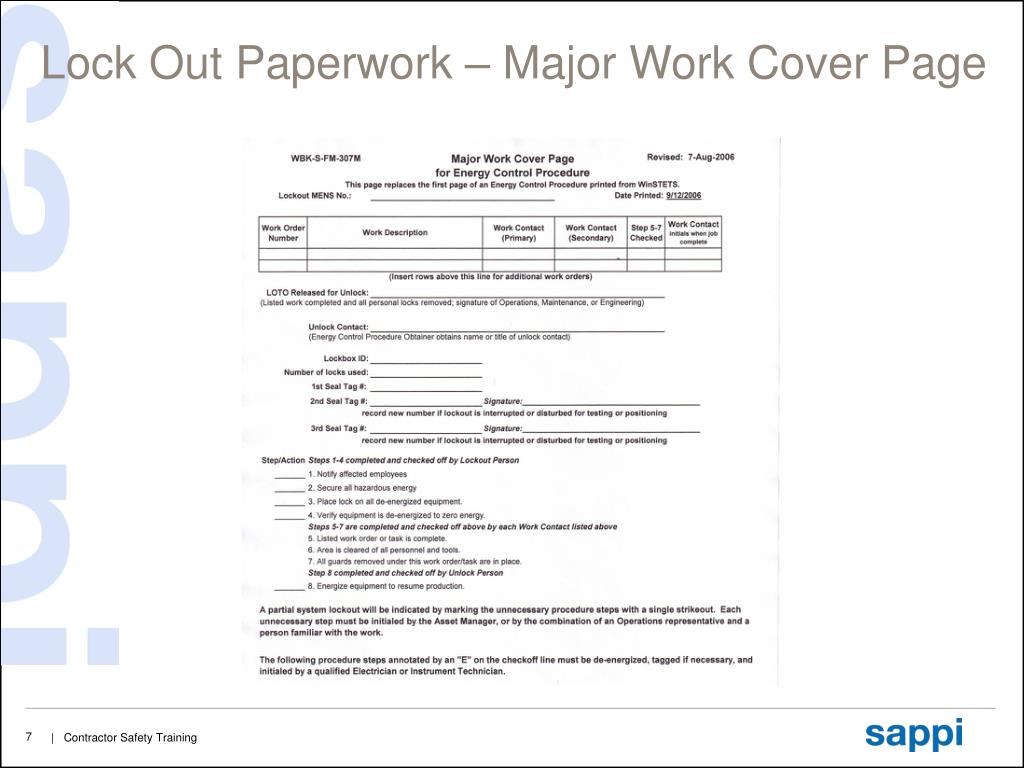
Paperwork isn’t bureaucracy—it’s accountability. It defines: - Which energy sources must be isolated - The correct sequence for shutdown and isolation - Who performed the lockout - When it was done - How verification was completed
When done right, LOTO documentation becomes the single source of truth during maintenance.
What OSHA Requires in LOTO Documentation
OSHA doesn’t prescribe a specific form, but it does demand completeness. Under 1910.147(c)(4), employers must develop "written procedures" that clearly outline the steps for shutting down, isolating, blocking, and securing machines.
Key elements every LOTO document must include:
- Machine or equipment identification – Generic names like “mixer” aren’t enough. Use model numbers, line IDs, or serial numbers.
- Type and magnitude of hazardous energy – Electrical (480V), pneumatic (90 PSI), hydraulic (1,200 PSI), gravitational (elevated loads), etc.
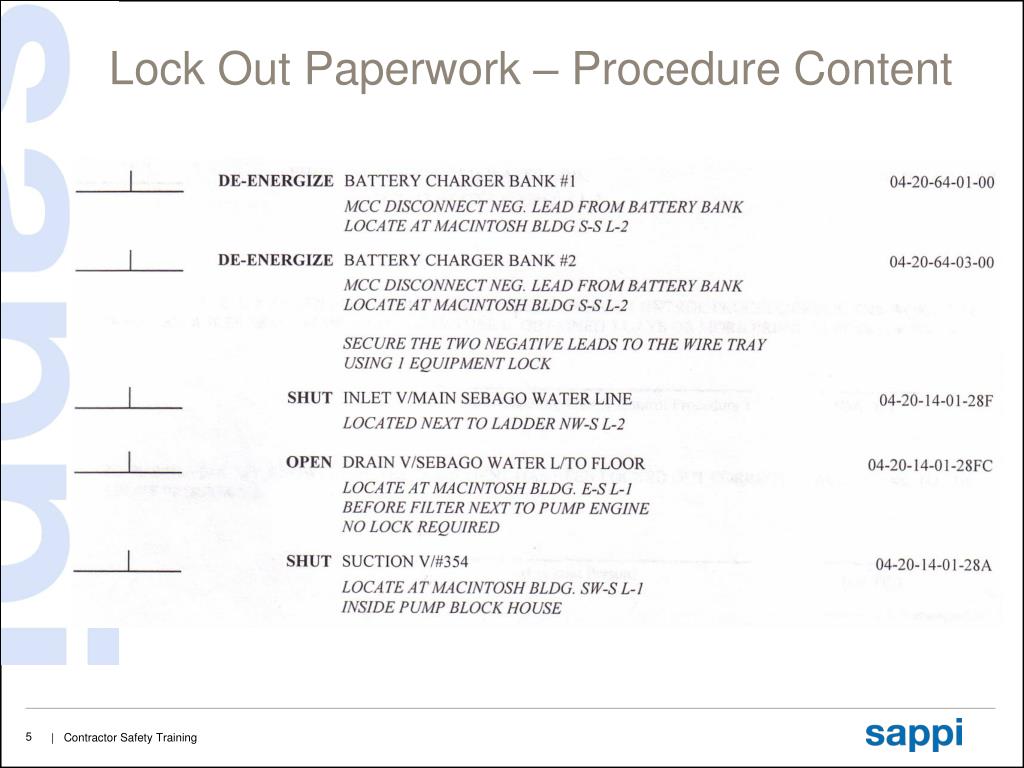
- Steps for shutdown and isolation – Sequential actions, like “Turn off main disconnect → Close hydraulic valve → Depressurize lines.”
- Specific lockout points – Exact locations of energy-isolating devices (e.g., “Circuit breaker #7 in Panel B-3”).
- List of authorized employees – Names or roles responsible for applying locks.
- Verification method – How zero-energy state is confirmed (e.g., “Test voltage with multimeter,” “Observe pressure gauge reads 0 PSI”).
- Group lockout instructions – If multiple people are working, how the group lockbox and shift changes are managed.
Missing any of these? Your paperwork is incomplete—and your team is at risk.
Common Mistakes in LOTO Paperwork (And How to Fix Them)
Even companies with robust safety cultures make critical errors. Here are the most frequent missteps—and how to correct them:
#### 1. Using One Template for All Machines A boiler isn’t a conveyor, and a hydraulic press isn’t a pump. Yet many facilities use the same generic LOTO form for everything. This leads to oversights.
Fix: Create machine-specific procedures. Include photos, diagrams, or QR codes linking to digital SOPs.
#### 2. Vague or Missing Isolation Points Phrases like “lock out main power” are useless if workers don’t know where the main power disconnect is.
Fix: Add precise descriptions: “Lock circuit breaker #12 in MCC Panel 4, located on east wall of electrical room.”
#### 3. Skipping Verification Steps Paperwork often says “verify isolation” but doesn’t define how.
Fix: Specify the tool and method: “Use Fluke 87V multimeter to test phase-to-phase and phase-to-ground at disconnect output.”
#### 4. Not Updating After Equipment Changes A machine upgrade? New control system? If the LOTO procedure isn’t revised, it’s obsolete.
Fix: Tie LOTO reviews to maintenance logs and capital upgrade checklists.
#### 5. Storing Paperwork in Inaccessible Locations Filing LOTO forms in a binder in the office defeats their purpose.
Fix: Use laminated copies at machine stations, digital versions on tablets, or QR codes on equipment tags.
What a Real LOTO Procedure Looks Like
Let’s walk through an actual example for a robotic welding cell.
Equipment: Robotic MIG Welding Station – Line 5, Cell A Hazardous Energies: - Electrical: 480V 3-phase (Robot controller, welder) - Pneumatic: 85 PSI (Clamps, actuators) - Stored energy: Capacitor banks (welder)
- Shutdown Steps:
- Press E-stop on teach pendant.
- Power down robot controller via main switch.
- Close air supply valve at junction block (Tag: “ISO-A1”).
- Depressurize pneumatic lines using manual bleed valve.
- Open main disconnect (Breaker #5B in Panel 3).
- Apply personal lock and tag to disconnect.
- Discharge welder capacitors using grounding rod.
- Test for zero energy:
- - Verify 0V at disconnect output (Fluke 87V)
- - Confirm pressure gauge reads 0 PSI
- - Physically check clamp position
Verification Signed By: Jane Doe (Maintenance Tech #124) Time: 09:15 AM Work Scope: Replace end-effector nozzle
This isn’t theoretical. This is what protects workers. This is what auditors look for.
Digital vs. Paper LOTO Documentation: Which Wins?
The debate isn’t about paper versus digital—it’s about reliability, traceability, and usability.
| Factor | Paper | Digital |
|---|---|---|
| Accessibility | Can be lost, damaged, or locked in an office | Available on tablets, phones, kiosks |
| Updates | Slow, manual, prone to version errors | Instant push updates, revision history |
| Audit Trail | No timestamps, hard to verify | Timestamps, GPS, user login tracking |
| Training Integration | Separate from e-learning | Can embed videos, diagrams, quizzes |
| Compliance Proof | Physical signature only | Digital signature with metadata |
Many large manufacturers now use digital LOTO platforms. They reduce errors, speed up lockout cycles, and provide ironclad compliance records.
That said, paper isn’t dead. In environments with dust, moisture, or explosion risks, printed, laminated procedures are still valid—so long as they’re controlled, current, and available at point of use.
The best approach? Hybrid. Use digital for storage, updates, and training. Deploy printed versions where technology can’t go.
How to Audit Your LOTO Paperwork (And Pass OSHA)
Don’t wait for an incident or inspection to review your procedures. Conduct regular audits using this checklist:
- ✅ Are all machines covered? (No gaps in documentation)
- ✅ Are isolation points clearly marked and described?
- ✅ Do procedures include verification methods?
- ✅ Are forms signed, dated, and traceable to individuals?
- ✅ Are old or decommissioned machines removed from logs?
- ✅ Are group and shift-change procedures defined?
- ✅ Has training been documented for all authorized employees?
Schedule audits quarterly. Involve frontline workers—they’ll spot flaws engineers miss.
One plant reduced LOTO deviations by 76% in six months simply by having maintenance techs review procedures during safety huddles.
Building a Culture Where Paperwork Matters
The best LOTO documentation fails if workers don’t use it. That’s a cultural problem.
Start by explaining why each line on the form exists. Show real incidents caused by skipped steps. Make procedures part of onboarding and refresher training.
Empower workers to stop work if paperwork is missing or unclear. Recognize teams that complete clean, accurate LOTO logs.
When a technician fills out a lockout form correctly, acknowledge it. That reinforcement builds habits.
Safety isn’t just what you do—it’s what you record.
Final Thoughts: Treat LOTO Paperwork Like a Safety Contract
Lockout tagout paperwork is not red tape. It’s a contract between employer and employee: We will protect you, and in return, you will follow the process.
Every blank field, vague instruction, or missing signature erodes that contract.
Take the time to create precise, usable, living documents. Review them. Train on them. Enforce them.
Because when a machine starts unexpectedly, it won’t be the lock that saves the worker—it’ll be the paper trail that ensured the lock was applied correctly.
Act now. Audit your LOTO forms. Fix the gaps. Make safety documentation as non-negotiable as the lockout itself.
FAQs
What must be included in a lockout tagout procedure? OSHA requires machine identification, energy types, shutdown steps, isolation points, verification methods, and authorized personnel details.
Can LOTO procedures be digital? Yes. Digital systems are acceptable if they ensure accessibility, accuracy, and auditability—and are part of a controlled program.
Who is responsible for completing LOTO paperwork? Authorized employees performing the lockout must complete and sign the documentation.
How often should LOTO procedures be reviewed? Annually, or whenever equipment changes, incidents occur, or new hazards are identified.
What happens if LOTO paperwork is missing during an audit? OSHA may cite the employer for non-compliance, issue fines, and require immediate corrective action.
Do all machines need a written LOTO procedure? Yes, if they have hazardous energy sources and servicing requires removal of guards or exposure to danger zones.
Can one LOTO form cover multiple machines? Only if the machines are identical in energy sources and isolation methods. Otherwise, each requires its own documented procedure.
FAQ
What should you look for in Lockout Tagout Paperwork: The Hidden Weak Link in Safety? Focus on relevance, practical value, and how well the solution matches real user intent.
Is Lockout Tagout Paperwork: The Hidden Weak Link in Safety suitable for beginners? That depends on the workflow, but a clear step-by-step approach usually makes it easier to start.
How do you compare options around Lockout Tagout Paperwork: The Hidden Weak Link in Safety? Compare features, trust signals, limitations, pricing, and ease of implementation.
What mistakes should you avoid? Avoid generic choices, weak validation, and decisions based only on marketing claims.
What is the next best step? Shortlist the most relevant options, validate them quickly, and refine from real-world results.